
All Psychology Paper 1 A* Model Essays
This document contains model answers for every 16-mark essay question that may appear in AQA Psychology Paper 1. Each answer has been verified using specialist AI marking software and awarded between 14 and 16 marks, with the rationale for each mark documented in the comments section.
Colour-coded annotations follow a consistent system throughout:
Black — AO1 (Knowledge and Understanding)
Red — AO3 (Evaluation: Counterargument)
Orange — AO3 (Evaluation: Interactionist perspective)
Green — AO3 (Evaluation: Supporting argument)
What A* Model Answers are included:
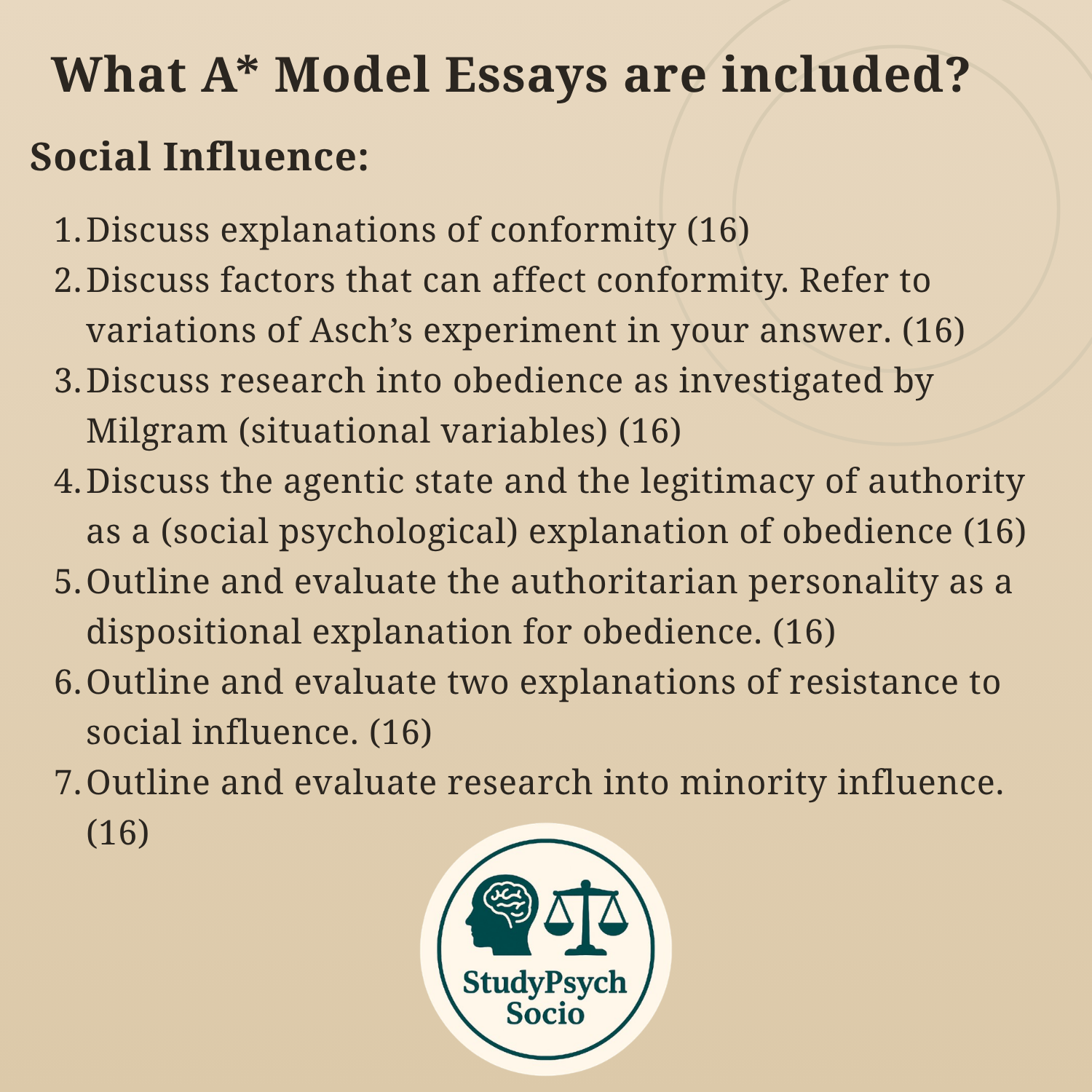
Social Influence:
Discuss explanations of conformity
Discuss factors that can affect conformity. Refer to variations of Asch’s experiment in your answer.
Discuss research into obedience as investigated by Milgram (situational variables)
Discuss agentic state and legitimacy of authority as a (social psychological) explanation of obedience
Outline and evaluate the authoritarian personality as a dispositional explanation for obedience.
Outline and evaluate two explanations of resistance to social influence.
Outline and evaluate research into minority influence.
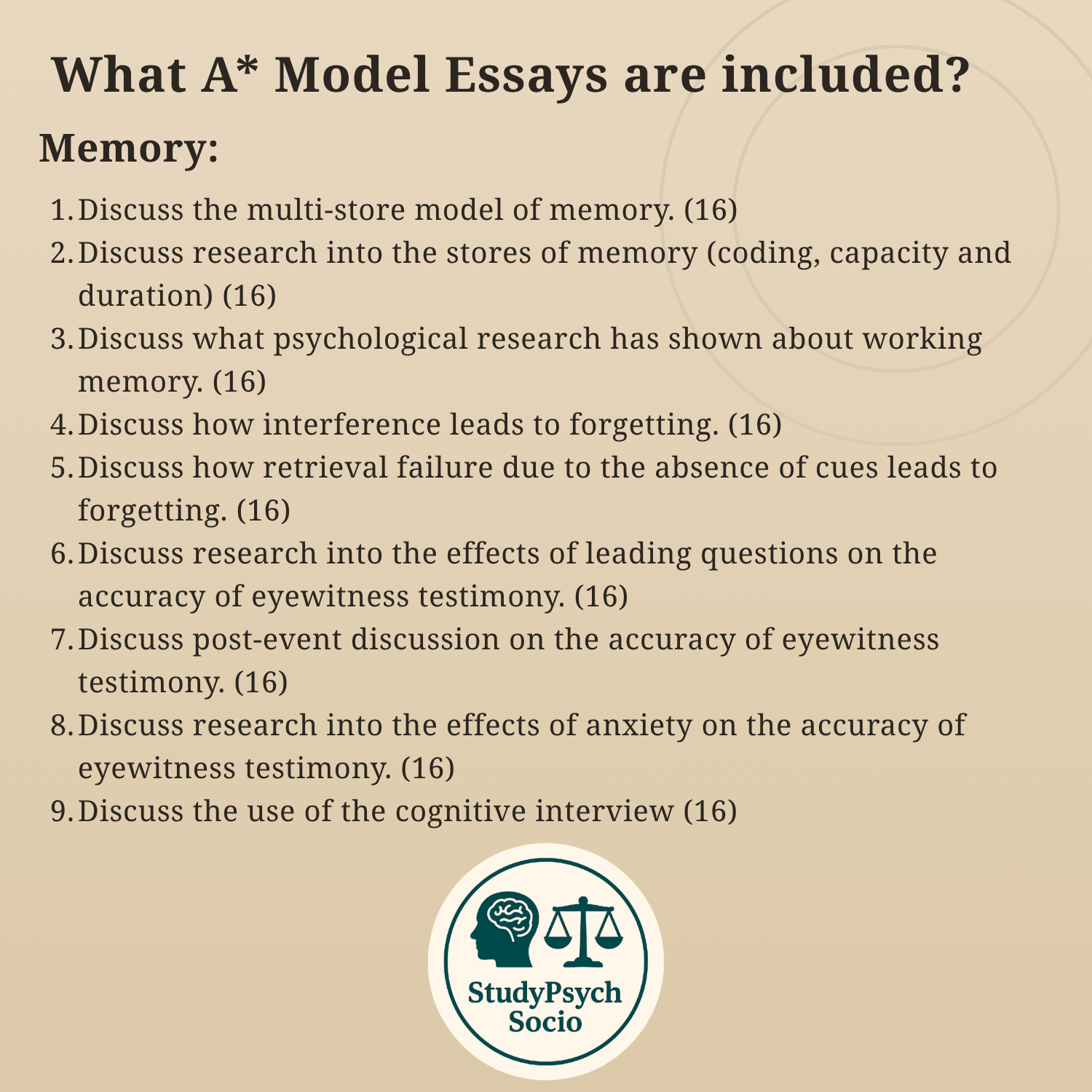
Memory:
Discuss the multi-store model of memory. (16)
Discuss research into the stores of memory (coding, capacity and duration) (16)
Discuss what psychological research has shown about working memory. (16)
Discuss how interference leads to forgetting. (16)
Discuss how retrieval failure due to the absence of cues leads to forgetting. (16)
Discuss research into the effects of leading questions on the accuracy of eyewitness testimony. (16)
Discuss post-event discussion on the accuracy of eyewitness testimony. (16)
Discuss research into the effects of anxiety on the accuracy of eyewitness testimony. (16)
Discuss the use of the cognitive interview (16)
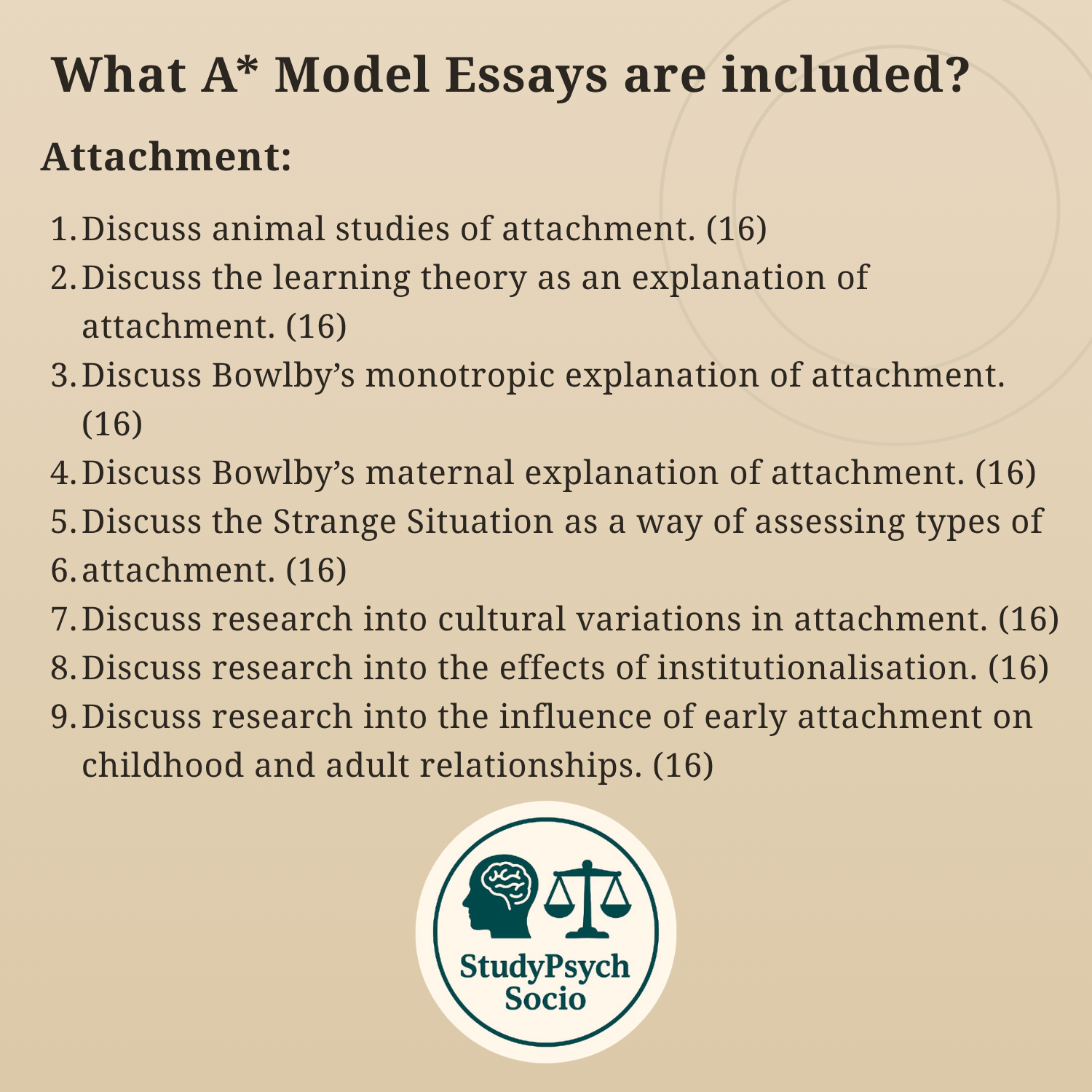
Attachment:
Discuss animal studies of attachment. (16)
Discuss the learning theory as an explanation of attachment. (16)
Discuss Bowlby’s monotropic explanation of attachment. (16)
Discuss Bowlby’s maternal explanation of attachment. (16)
Discuss the Strange Situation as a way of assessing types of
attachment. (16)
Discuss research into cultural variations in attachment. (16)
Discuss research into the effects of institutionalisation. (16)
Discuss research into the influence of early attachment on childhood and adult relationships. (16)
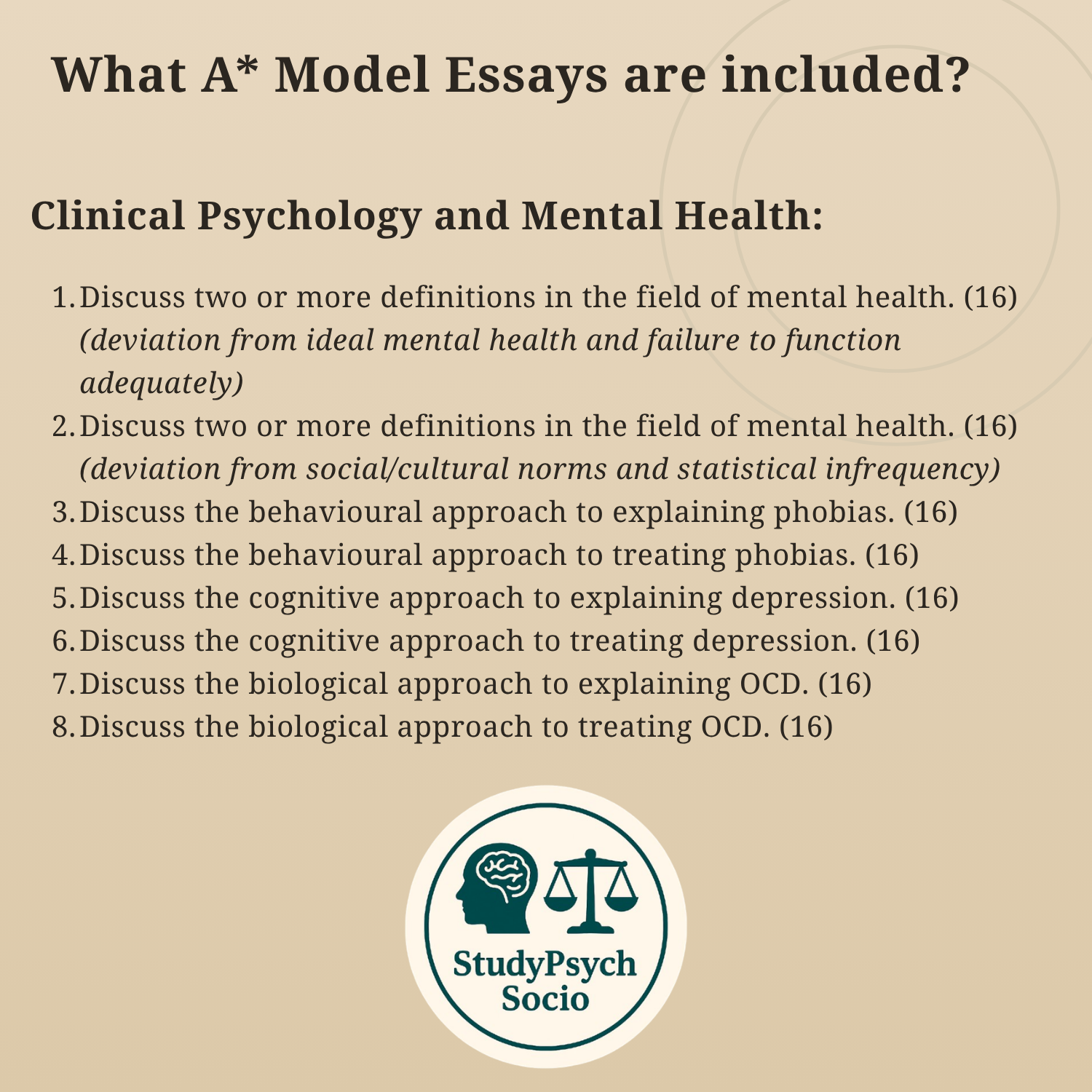
Clinical Psychology and Mental Health:
Discuss two or more definitions in the field of mental health. (16) (deviation from ideal mental health and failure to function adequately)
Discuss two or more definitions in the field of mental health. (16) (deviation from social/cultural norms and statistical infrequency)
Discuss the behavioural approach to explaining phobias. (16)
Discuss the behavioural approach to treating phobias. (16)
Discuss the cognitive approach to explaining depression. (16)
Discuss the cognitive approach to treating depression. (16)
Discuss the biological approach to explaining OCD. (16)
Discuss the biological approach to treating OCD. (16)
This document contains model answers for every 16-mark essay question that may appear in AQA Psychology Paper 1. Each answer has been verified using specialist AI marking software and awarded between 14 and 16 marks, with the rationale for each mark documented in the comments section.
Colour-coded annotations follow a consistent system throughout:
Black — AO1 (Knowledge and Understanding)
Red — AO3 (Evaluation: Counterargument)
Orange — AO3 (Evaluation: Interactionist perspective)
Green — AO3 (Evaluation: Supporting argument)
What A* Model Answers are included:
Social Influence:
Discuss explanations of conformity
Discuss factors that can affect conformity. Refer to variations of Asch’s experiment in your answer.
Discuss research into obedience as investigated by Milgram (situational variables)
Discuss agentic state and legitimacy of authority as a (social psychological) explanation of obedience
Outline and evaluate the authoritarian personality as a dispositional explanation for obedience.
Outline and evaluate two explanations of resistance to social influence.
Outline and evaluate research into minority influence.
Memory:
Discuss the multi-store model of memory. (16)
Discuss research into the stores of memory (coding, capacity and duration) (16)
Discuss what psychological research has shown about working memory. (16)
Discuss how interference leads to forgetting. (16)
Discuss how retrieval failure due to the absence of cues leads to forgetting. (16)
Discuss research into the effects of leading questions on the accuracy of eyewitness testimony. (16)
Discuss post-event discussion on the accuracy of eyewitness testimony. (16)
Discuss research into the effects of anxiety on the accuracy of eyewitness testimony. (16)
Discuss the use of the cognitive interview (16)
Attachment:
Discuss animal studies of attachment. (16)
Discuss the learning theory as an explanation of attachment. (16)
Discuss Bowlby’s monotropic explanation of attachment. (16)
Discuss Bowlby’s maternal explanation of attachment. (16)
Discuss the Strange Situation as a way of assessing types of
attachment. (16)
Discuss research into cultural variations in attachment. (16)
Discuss research into the effects of institutionalisation. (16)
Discuss research into the influence of early attachment on childhood and adult relationships. (16)
Clinical Psychology and Mental Health:
Discuss two or more definitions in the field of mental health. (16) (deviation from ideal mental health and failure to function adequately)
Discuss two or more definitions in the field of mental health. (16) (deviation from social/cultural norms and statistical infrequency)
Discuss the behavioural approach to explaining phobias. (16)
Discuss the behavioural approach to treating phobias. (16)
Discuss the cognitive approach to explaining depression. (16)
Discuss the cognitive approach to treating depression. (16)
Discuss the biological approach to explaining OCD. (16)
Discuss the biological approach to treating OCD. (16)